Closing Time: Federer tops Murray for 16th Major title

31 Jan 2010 by Matthew Zemek in Australian Open 2010

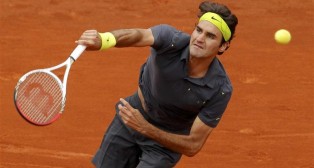
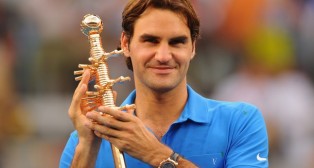
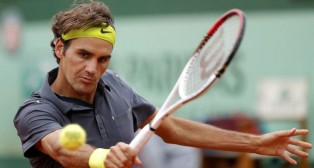
Roger Federer Won Australian Open 2010 Mens titleThe 2010 Australian Open, much like the 2009 edition of the event, will be remembered in a very simple way: It witnessed the continued dominance of tennis’s greatest modern-day champions.

The annual two-week tournament – often referred to as the “Happy Slam” – once again left underdogs and challengers in tears after 14 days of competition. That’s because the elite players in this sport – and no one else – announced to the rest of the world that they’re intent on staying at the top.

Saturday, Serena Williams defended her women’s singles championship and reminded the WTA Tour that she’s still on top of her game. One day later, on a sweat-filled Sunday night at Rod Laver Arena, Roger Federer followed Rafael Nadal’s 2009 crown with his own latest and greatest achievement.

Winner Poker

Federer might have lost to Nadal in last year’s men’s singles final at Melbourne Park, but that wrenching five-set loss – played at a very high level for the first four sets of a match Rafa won in five – illustrated how high the bar had been set by two decorated rivals. Federer and Nadal spent the 2009 Australian Open beating back all nascent challengers, and so it must be said that after Federer took home the 2010 men’s singles trophy by beating Andy Murray in straight sets, the “old guard” of proven champions has maintained superiority over and against the rest of the field.

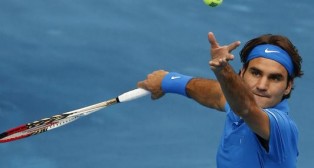
Federer proved to be the better player throughout Sunday’s championship match against the fifth-seeded Murray. A dependable serve combined with airtight focus on every essential point enabled the world’s No. 1 player to produce a 6-3, 6-4, 7-6 (11) triumph in 2 hours and 41 minutes. While denying Murray his first Major crown and forcing the United Kingdom to wait a few months for its long-sought breakthrough moment, Federer won his 16th Major championship to distance himself from Pete Sampras’s former record of 14 Big Four scalps.

There was no mystery to the sweet supremacy of the Swiss: In a refrain that’s become extremely familiar to every opponent not named Nadal, the most accomplished tennis player of the open era simply lifted his level at the business end of each and every set.

Earn Virgin Atlantic Flying Club Miles...

Even though Murray increased his stature over the past two week in Australia, and despite the fact that men’s tennis has managed to produce many different men’s singles finalists in the past year, it’s still the big boys who – with only a few rare exceptions – add to their trophy case at the end of a premium. Serena Williams is to women’s tennis as the Federer-Nadal axis is to the ATP Tour, for only these three players know how to close down opponents. Whenever intrigue entered the building on Sunday night, it was Federer who – like Serena in the women’s final against Justine Henin the day before – found the form and fearlessness needed to tuck away another titanic triumph, adding to his growing legend in the process.

You could talk about the fact that Roger Federer outserved Murray in this match, 66 to 57 percent. You could talk about the fact that Murray thumped only two aces in the first two sets. You could analyze this match by rightly noting that Murray didn’t do enough with the short balls Federer sent his way. All of those elements played a substantial role in deciding this duel, but the most salient piece of commentary that can be applied to this contest is that when the outcome of a set hung in the balance, it was Federer who brought a bolder brand of ball to the stadium.

In the first set, leading 4-3 and 30-all on Murray’s serve, Federer played two virtually perfect points – finishing with an inside-out forehand winner – to break for 5-3. One authoritative hold later, he put the first set under his belt and didn’t allow Murray to get a sniff at an early-stage comeback.

Get $1000 Bonus on Ladbrokes Poker

In set two, Federer broke early and was able to hold serve after grabbing a quick 2-1 lead. Instead of feeling the pressure late in the second set, the Swiss only improved his first serve when toeing the line at 4-3 and 5-4. Federer won eight of nine points in those two separate service games, using a mix of aces, service winners, and powerful first serves that set up easy put-away forehands.

And then came the third-set tiebreak that left a lasting imprint on everyone who witnessed it. It wasn’t quite “Borg-McEnroe 1980″ on the fabled lawns of Wimbledon, but a 24-point tussle that lasted over 18 minutes provided a powerful conclusion to the 2010 Australian Open.

Murray had his second set point of the third set at 6-5 in the breaker, but netted a down-the-line forehand approach to the deuce corner. On another set point at 7-6, Murray saw a makeable backhand volley drift wide of the sideline. On his fourth set point, at 9-8, Federer dictated the proceedings and drew a forced error on a defensive lob. On a fifth set point at 11-10, Murray couldn’t do much about a strong first serve from Federer which hit the wide ad corner of the service box. Murray spent his time flinching on set points, while Federer – though hardly error free – was able to deliver the goods each time his Scottish opponent threatened to take this match to a fourth set.

Then, at 11-all, the 15-time Major champion decided to put his foot down in the pursuit of Sweet Sixteen.

Fed hit behind Murray to produce his third championship point, and when Murray netted a backhand at 11-12, it was all over. Just as Serena Williams persevered against Justine Henin and stayed on the mountaintop in the women’s game, Mr. Federer reminded Andy Murray that the Roger-Rafa combo – which has now won 18 of the past 20 men’s singles Majors – is still to be trusted in the biggest tournaments on the calendar.

The Australian Open has now concluded. Serena Williams and Roger Federer made sure the Happy Slam ended in sadness for everyone but themselves.

Pacific Poker

Tags:


Tested But Triumphant: Serena Fights Off Henin for 5th Aussie Title

30 Jan 2010 by Matthew Zemek in Australian Open 2010

Serena Williams Won Australian Open 2010 Tennis Championship TitleJustine Henin stood on Mount Olympus, playing tennis from the gods. Serena Williams realized, though, that even tennis legends are mortal. That’s why one great champion turned back another in a deliciously dramatic Australian Open women’s singles final.

Serena Jameka Williams and Justine Henin entered their ultimate Saturday showdown in Melbourne with 18 Major singles titles between them. Because the two iconic athletes were contesting the first Major final in 14 head-to-head meetings, Williams and Henin were assured of creating a 19th Big Four championship inside Rod Laver Arena. The only question was: Who would be able to rise above the pressure in this classic confrontation?

For a while, it appeared that Henin would do the deed, but in the end, it was the world’s best female tennis player who prevailed on the basis of her patience.

Winner Poker

Serena WilliamsWilliams did lead this match by a 6-4, 3-2 score, and seemingly had her Belgian foe on the ropes midway through the second set. However, in keeping with the pattern of her career, Henin refused to wilt in the face of an opponent’s resourceful and resolute performance. Just when she was teetering on the edge of a straight-set dismissal, the seven-time Major champion elevated her game.

Serving at 2-3, Henin played a pair of picture-perfect points at deuce to level the set at 3-all. Then, late in the seventh game of the set, Henin gained confidence after her American adversary missed a second serve by a considerable margin. Throughout this match, Henin made a conscious and intentional choice to attack Serena’s second serve with punishing returns.

Most of the night, those high-risk returns zoomed beyond the baseline, but late in the second set, every shot off the Belgian’s racquet found the mark. Playing unconscious tennis and standing on a mountaintop of magnificence, Henin won 15 straight points to not only take the second set, but gain a 1-0 lead in the third and make a dent in Serena’s service game.

Earn Virgin Atlantic Flying Club Miles...

For the first time since the 2006 Wimbledon final involving Henin and France’s Amelie Mauresmo, a women’s singles final at a Major tournament had gone three sets. Henin owned all the momentum, and the capacity crowd inside Laver Arena wondered if the unseeded superstar – back from a 16-month hiatus from the WTA Tour – could continue to calibrate her high-risk groundstrokes.

She couldn’t… but in order for that to happen, Serena Williams had to make Henin question herself.

Serving in the third set at 0-1, 15-40, Serena threw down an ace and then dominated the 30-40 point with a series of groundstrokes followed by a forehand volley winner. When she held for 1-all in the deciding stanza, Serena not only avoided trailing by a break; more importantly, she stopped Henin’s hot streak and caused the underdog to feel pressure once again.

Get $1000 Bonus on Ladbrokes Poker

That’s when the spell got broken.

After the two champions exchanged breaks of serve, it was Henin who flinched at 2-all, 30-15, in the third. Henin tossed in a double fault for 30-all and then watched Serena smack an intimidating return winner for 30-40. So intent on finishing points with authority, Henin overcooked an easy forehand on break point to give Serena a 3-2 lead. The Belgian bomber, once on Mount Olympus, had come down from her perch. Serena Willams had waited her out successfully, much as Roger Federer waited out Nikolay Davydenko in this tournament’s men’s quarterfinal match from Wednesday afternoon.

The rest was history. Serena won the final three games and captured a riveting 6-4, 3-6, 6-2 decision to capture her 12th Major singles title, tying her with Billie Jean King. Justine Henin helped to make this match memorable, but the only thing people will truly remember as this match fades into the history books is that Serena Williams won the 2010 Australian Open, reminding fans and pundits alike that she’s the best tennis player of a young 21st century.

Pacific Poker

Tags:


At Your Service: Men’s Final Preview

30 Jan 2010 by Matthew Zemek in Australian Open 2010

The men’s singles final of the 2010 Australian Open doesn’t figure to be boring, but an analysis of the titanic tilt involving top-seeded Roger Federer and fifth-seeded Andy Murray isn’t going to win many points for originality.

No, it’s hard to be overly creative in assessing the second Major final to pair the world No. 1 with Britain’s best hope for a defining tennis championship. When Federer and Murray lock horns on Sunday at Rod Laver Arena, their ballyhooed battle will come down to the two most elemental shots in tennis: the serve and the return.

For Federer, the first serve will be hugely important in the Swiss superstar’s twenty-second Major final. Fed’s second-serve kicker is solid, and it will win him some points, but it’s really on the first ball that the 15-time Major champion must make his move.

Winner Poker

Federer depends on a steady stream of cheap points during matches. A copious amount of service points with no more than three strokes enables Federer to feel comfortable on the court and pick his spots as a returner. If the first serve is flowing on a consistent basis, Federer should be able to worm his way out of tight spots and steer the match in his direction.

With all that having been said, the biggest reason why Federer’s first serve will be so important on Sunday is that if he doesn’t convert a high percentage of first balls, Murray will make him pay. The Scotsman, seeking his first Major singles title, owns what is felt by many to be the best return of serve in men’s tennis, with Nikolay Davydenko being a close second.

Murray eats up second serves, and so if Federer has to hit a lot of second balls, he’ll lose a fair share of service points. Murray can then dictate the flow of the match and maintain a steady advantage.

Earn Virgin Atlantic Flying Club Miles...

Speaking of Murray’s ability to keep the upper hand, that will happen only if Britain’s best manages to beef up his second serve.

One of the big knocks on Murray’s otherwise resplendent set of skills is a cream-puff second serve bereft of bite or kick. Murray’s vulnerability on second-serve points – which really separate elite pros from also-rans in this sport – kept him from reaching the final round of every Major in 2009.

As he attempts to become the first British subject since Fred Perry (in 1936) to win a Big Four championship, Murray will have to find a second-serve kicker that can bail him out of jail.

Get $1000 Bonus on Ladbrokes Poker

If Murray lacks an above-average second serve, Federer will be able to tee off and win points quickly, which will deny Murray the ability to construct extended rallies and engage the Swiss in backhand-to-backhand exchanges that will certainly favor the Scot.

A sure way to assess this match is to identify quick points and distinguish them from prolonged points. The more quick points in this match, the better for Fed. The more extended rallies – particularly on the backhand wing – the better it will be for Murray.

See – that analysis was pretty boring. Yet, it’s hard to look at this blockbuster matchup in a decidedly different way. The fictional character James Bond existed “At Her Majesty’s Secret Service.” On a significant Sunday in Melbourne, Australia, Andy Murray will need to display first-rate service if he is to topple Roger Federer and make tennis history in the country James Bond called home.

Pacific Poker

Tags:


Great Champions, Great Escapes

28 Jan 2010 by Matthew Zemek in Australian Open 2010

On a memorable Wednesday afternoon at the 2010 Australian Open, a lot of tennis fans had very good reason to think that Serena Williams and Roger Federer were both going to be knocked out in their respective quarterfinal matches.

Yet, those same people should have realized that when champions are getting outplayed, they can and do find ways to change the flow of a given competition. Otherwise, they wouldn’t be champions in the first place.

Whether you wrote off Serena and Federer or not, it’s impossible to any longer ignore the fact that the two top seeds in the women’s and men’s singles tournaments are simply made of rare and special stuff. Yes, a big comeback does require an adversary to step off the mountaintop and come back to earth, but that same comeback also demands the ability on the part of the champion to ride out a storm, stay close enough to remain a factor, and use a few turning points as emotional fuel for a defining and decisive surge.

Winner Poker

Plainly put, Serena and Federer – both in deeper-than-deep trouble inside Rod Laver Arena – used solitary mistakes by their formidable but frail foes to turn matches on a dime. In so doing, these two giants of tennis – with a combined 26 Major championships to their names (11 for Serena, 15 for Federer) – reminded Australian spectators and global TV watchers why they should never be discounted, even in the midst of the deepest and darkest valleys imaginable.

How bleak was Serena’s outlook in her round of eight match against seventh-seeded Victoria Azarenka? The younger Williams sister – moving horribly and using terrible footwork – blew a number of game points in the first set  and created a negative vibe for one and a half sets. With Azarenka storming to a 6-4, 4-0 lead, many tennis watchers assumed that the even-year jinx which has afflicted Serena Down Under (she won the Australian Open in 2003, 2005, 2007, and 2009) would continue.

But just when you might have thought it was safe to mentally advance Victoria Azarenka into the semifinals, the competitive pride and ruthlessness of Serena Williams returned. The best closer in women’s tennis seized on a brief moment of weakness from her Belorussian challenger to author a comeback for the ages.

Earn Virgin Atlantic Flying Club Miles...

With Serena serving at 0-4 and deuce, Azarenka tried a drop shot that didn’t work. Though trailing by a mile and on the verge of defeat, Serena found fire and focus after that one errant play by the No. 7 seed. Serena promptly won that game to get on the board, and before very long, the American was blasting winners all over the court and not making the unforced errors that had sabotaged her whole game for the first one and a half sets. Serena stormed through a second-set tiebreak, and before anyone could adjust to this match’s transformed dynamics, Serena had walked off with a 4-6, 7-6 (4), 6-2 win and a spot in the semifinals against China’s Li Na.

For Federer, the pattern was oh-so-similar to the one Serena experienced.

After getting crushed in a set and a half by Russia’s Nikolay Davydenko, Federer gained his reprieve and made the most of it. Already down a set, Federer – serving at 1-3 and 30-40 in the second set – watched Davydenko race inside the service box and net a sitter that should have produced a winner and a double-break 4-1 lead. When Davydenko missed that shot, however, the Russian began to doubt himself, and Federer – being the accomplished performer he is – realized that such a shift had taken place.

Get $1000 Bonus on Ladbrokes Poker

Federer turned on the afterburners and acquired the flow and feel that had been missing in the first one and a half sets. The Swiss superstar raced through the back end of the second set and a bagel in the third, giving an increasingly nervous Davydenko absolutely nothing to work with. Davydenko woke up midway through the fourth set and erased a 3-1 Federer lead, but when the chips were on the table, Federer broke “Kolya” at 5-all and then – at 6-5 – served out the match thanks to a barrage of untouchable first serves. It all started with a costly missed volley from Davydenko in the fifth game of the second set.

One moment became a turning point in a crazy quarterfinalk, but that’s largely because Roger Federer was able to see that brief lapse as a gateway toward victory, and not a reason to fade away into the night.

Serena Williams. Roger Federer. They’re in the final four in Australia. Underestimate them at your own considerable peril.

Pacific Poker

Tags:


The Other Side of the Coin

26 Jan 2010 by Matthew Zemek in Australian Open 2010, Tennis
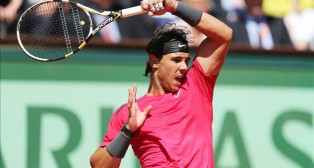
Rafael Nadal

Rafael Nadal

There will be a time and place to celebrate the winners of the first two men’s singles quarterfinals at the 2010 Australian Open. (In the next post, actually!) But one can’t comment on two riveting spectacles at Melbourne Park without addressing the acute agony of the valiant competitors who lost on Tuesday.

Andy Roddick and Rafael Nadal, for all they’ve achieved in the sport they love so much, were left to wonder how their best efforts – not their best technical performances, but their best and most spirited fights – could lead to such physical pain combined with disappointingly early exits from Australia.

Roddick, the seventh seed, lost to 14th-seeded Marin Cilic in the day’s first quarterfinal, 7-6 (4), 6-3, 3-6, 2-6, 6-3. Nadal, the No. 2 seed and the defending champion, lost the first two sets against fifth-rated Andy Murray before retiring in the third set of a match the Scotsman led, 6-3, 7-6 (2), 3-0. While Cilic and Murray entirely earned their spots in the first men’s semifinal on Thursday night, the recognizable opponents they defeated could tell plentifully powerful tales in defeat.

Winner Poker

For Roddick, the nature of his loss had to sting in a larger context. Roddick, a 27-year-old who has been through so many tennis wars in his career, has long been a victim of terrible timing. If Roddick had hit his prime years even two years earlier than he actually did, the American likely would have captured at least one Wimbledon, if not two. However, this mainstay in the top 10 on the ATP Tour just happened to develop at the same time that a Swiss fellow named Roger Federer discovered how to blend mental toughness with a full arsenal of shots. As a result, Federer would win multiple Wimbledon, U.S. Open, and Australian Open titles at Roddick’s expense.

But that doesn’t tell the whole story about the terrible timing of Roddick’s lucrative but trophy-poor tennis life.

Bad timing also touched Roddick’s 2005 Wimbledon final against Federer. With Roddick playing his very best tennis and leading the Swiss superstar 4-2 in the third set of a match tied at one set apiece, the skies opened up in suburban London and caused a rain delay. Given a crucial break, Federer regrouped and dominated when play resumed. Because of the weather, Roddick lost one of his best chances to claim a Wimbledon championship.

But an even more excruciating loss would come four years later.

Roddick – at 8-all in the fifth set – had 15-40 on Federer in the 2009 Wimbledon final. Just one more point would have enabled this Texas resident to serve for the crown he had always coveted. But his Swiss foe played two authoritative points, held for 9-8, and eventually won the third set, 16-14, to deny Roddick yet again. A hard-working athlete proved to be in the right place, but not at the wrong time.

Earn Virgin Atlantic Flying Club Miles...

This brings us to the loss to Cilic.

Roddick was playing an opponent who had just come off a 4-hour, 38-minute win in the fourth round of this event. Heading into this match, Roddick had a good chance to win by virtue of his physical fitness developed under coach Larry Stefanki.

Instead, Roddick’s body betrayed him at the wrong time. Early in the second set, he asked for an ATP trainer. It was revealed after the match that he felt numbness in two of his fingers along with an achy shoulder that took a lot of pop from his fearsome serve. The lack of punch in Roddick’s groundstrokes was evident against Cilic, who – though inconsistent – was able to lift his level of play in the fifth set.

Basically, if Andy Roddick didn’t have bad luck, he wouldn’t have any luck at all.

And then there was Rafael Nadal’s sad end against his rival from Scotland.

Nadal and Murray played two thrilling sets of tennis that were closely contested and turned on a handful of points. Nadal broke Murray in each of the first two sets, only to get broken back in the very next game. Murray played the best major tournament match of his career (which is saying something for the No. 4 player in the world), but even when he took a two-set lead, Nadal – who moved fluidly around the court – still had a shot to create a protracted battle. If anyone could come from two sets down, the six-time Major champion could.

Get $1000 Bonus on Ladbrokes Poker

But then, his dream – and his Australian Open title defense – died.

Nadal felt a twinge in his knee – which has been affected by tendonitis in recent months – on the second point of the second game of the third set. The Spaniard tried to make a go of it, but when Murray held for 3-0, this decorated performer felt there was little use trying to continue. Just when Nadal had seemingly regained a strong measure of health, his balky body spoke up at exactly the wrong time.

Andy Roddick and Rafael Nadal have nice problems compared to many, but that doesn’t change the fact that they endured very difficult losses in a tournament they hoped to own.

Pacific Poker

Tags:

« Older Posts